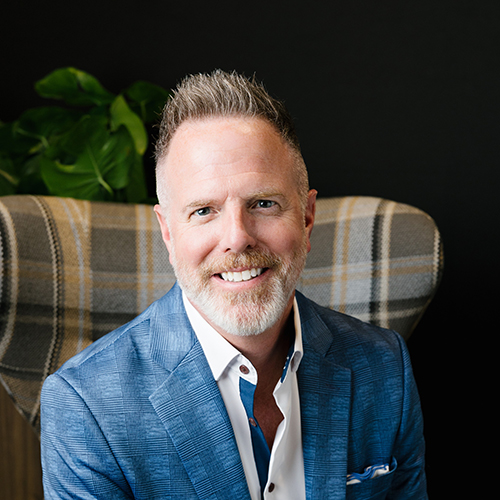
[00:00:06] Speaker A: Welcome to the Leadership window podcast with Dr. Patrick Jenks. Each week through a social sector lens, Patrick interviews leaders and experts and puts us in touch with trends and tips for leading effectively. Patrick is a board certified executive coach, a member of the Forbes Coaches Council, a best selling author, award winning photographer and a professional speaker.
And now, here's Dr. Patrick Jenks.
[00:00:31] Speaker B: Happy fall everyone. I hope everyone is doing great here in Columbia, South Carolina. Famously hot Columbia, South Carolina. I think the temperature is actually finally broken for the fall. We're down into the like high 50s at night now or over early morning. So loving that.
Hope you're doing well. We are on an episode today that is, I would say near and dear to my heart, but that sounds so weird for this topic.
It's close to an area of passion for me.
And if you've been a part of any of my trainings or part of my coaching or you've heard any of my work, you know that I'm a stickler for emotional intelligence, relationship organizational culture, and how important it is to be present with people.
Fully present, not on a screen like Tim and I are today. Even though you can't see us, we can see each other.
But really where I could, you know, put my hand on your shoulder, I can look you in the eye, I can shake your hand, I can.
You can read body language, we can be fully present in a room.
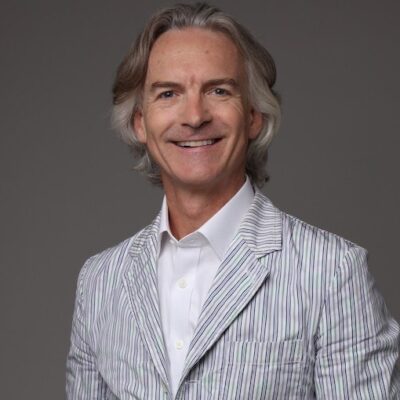
We're going to talk a lot about these kinds of things and even deeper, we're going to talk about the aesthetic value, aesthetic, not just visual, but the form and the harmony and the ambiance and the environment created when you're a leader and what the physical workplace has to do with that. Tim Carroll is my guest today. He's a Nashville, Tennessee native. He's an author, he is a business leader.
Fun fact. He's a former Broadway actor and singer. He led in shows like Grease and Smokey Joe's Cafe. We'll learn a little bit more about the journey from there to the corporate world.
Today, he's the founder and CEO of Lyric Workplace. It's a company he built on the belief that when every element of the workplace works in harmony, organizations perform at higher levels. Tim spent his career at the intersection of workplace design, leadership and organizational culture. Those are not mutually exclusive concepts. They are very intersecting. And through his years in the commercial interiors industry, he saw firsthand how the physical workplace shapes collaboration, talent, development, culture, and also how few companies actually understand that and treat it as the strategic asset that it is.
And that insight led him to found his company Lyric Workplace. And it's a firm designed not around product distribution, not around furniture and things, but around outcomes. He's not selling nails, he's selling holes. Right?
And it's around the belief that when design and technology and culture and experience, all those things work together, the workplace becomes much more than a building. It's more than a facility. It becomes literally a competitive advantage. He's the author of Workplace Reclaiming In Person Work in a Remote, Obsessed World. Does that ring a bell with anybody? The book examines how the physical environments influence all these things. Leadership, culture, organizational performance. Even his own podcast, Harmony at Work, can be found on Apple, Spotify, YouTube, and on his
[email protected] and boy, I could go on, but you should. We should have piqued your interest by now. So get some. Get. Get a pen, get ready to take some notes. Or better yet, just sit back and listen. This is just going to be a good conversation about life at work and how we can influence it. Tim, welcome to the show. So glad you're here. What did I miss?
[00:04:29] Speaker C: Thank you so much. I don't think I can live up to that introduction. But I will also say it's not weird to say it's near and dear to your heart. I believe this is very near and dear to my heart, and I believe it should be to everybody's, but I'm excited about having this conversation.
[00:04:44] Speaker B: It's pretty clear that it's near and dear to you. Hart. I mean, you've really dug into this thing. And I, you know, I will just say this just kind of on the side. You know, obviously we have a lot of guests on the show. They're from all over the place. They all do different things. We've had coaches and nonprofit practitioners and authors and, you know, data scientists and everything else. I will say this. Either you are the real deal in living out a real clear mission, or your branders are fantastic geniuses.
Seriously. Because you. You put yourself out there very clearly about who you are and why you're doing it. Folks, if you go to the website.
Lyric, Lyric. Which, by the way, spell that. It's. It's a. Isn't it an odds. It's L. Spell it.
[00:05:34] Speaker C: No, it's L, Y, R, I, c.lyric workplace.com.
[00:05:37] Speaker B: i don't know why. I thought it was a Q.
Lyric. Yeah, like the lyric of a song.
Lyricworkplace.com you. You will see that this is not just. This is not your typical interior design, office supply furniture kind of place. This is very different.
A Very different level, a much deeper level, and it's just inspiring. So, again, thanks for coming.
Maybe we start with a little bit of the story on how you got here, because I mentioned the fun fact at the beginning about your life on Broadway. What's led you from that stage to this one?
[00:06:15] Speaker C: Well, I mean, it's a question that I get asked frequently because it's a weird path to take. And it's not as if I went directly from the stage, walked off and got into furniture.
There was a lot of steps in between, and mainly it was I just was looking for more. I enjoyed my time performing, but I just thought, there's more out there for me. And so when I came back to Nashville, I started trying to decide what this next chapter was going to be.
And I realized a very interesting point, because I started looking at sales jobs, and I was like, oh, I don't want to be in sales. I'm not a salesperson. And then it hit me.
First of all, everybody's in sales every day, all day long. You're selling an idea, you're selling a something.
[00:07:12] Speaker B: Absolutely.
[00:07:12] Speaker C: And I realized I had been selling for years up in New York a product that, quite frankly, was a hard sell, and somehow I. I found myself able to do it, and that was me.
And so I realized that a lot of what I learned through the trying to get jobs, which you are constantly job hunting in.
In performing and in acting and singing.
So I just translated that to.
To corporate America, started moving my way up in larger companies, and then found my way into this industry of commercial interiors, which is a crazy industry. The minute I got in it, everybody said, you're not leaving. It's gotcha. No one leaves once they get in.
But really, I built my career on a desire to add value to people's lives in a leadership way. And so leadership's really been my guiding star.
And so everything I do, I do in honor of that, knowing that, as John Maxwell says, everything rises and falls on leadership. And so everything that any success I've ever had is because I focused on providing value to everyone in the organization. And then a rising tide will lift all ships.
[00:08:42] Speaker B: All right, well, there you have it, ladies and gentlemen. That's our episode for today.
I mean, that's just super, really, really good. I.
You know, I'd love to learn more about how your. What your leadership philosophy is at work, but let's talk about the work here for a minute.
I'll set this up a little bit. I'll try not to talk too much, but People who have been around me, know me, listen to this show, have heard me say so so many times how much I despise. I mean, I hate a bore. What are all the words? I loathe this virtual stuff.
Zoom meetings. Hate them.
Just hate them.
The idea of remote work and people calling in for staff meetings and, you know, trying to figure out communication tools and hate it. Just hate it. Now, all that being said, I won't go into all of why. Because I've done that enough.
I also get it. We're on Zoom right now. Thank God for it. Thank God for it. During COVID the technology that allowed us to do things we wouldn't have otherwise been able to do is here. It's awesome. I love technology.
I can do Zoom. I'm pretty good at it. I've learned new facilitation tricks and tools and ways to keep people engaged. And I coach remote teams all the time. Maybe most of the teams I coach are at least in part remote coaching a team of medical science liaisons in a pharmaceutical company.
Fifteen of them all live in different places from New York to Long beach, you know, so I got it, I get it. And people can perform at high levels. They. People are doing it, but I think they're the exception.
And I think that so much is being lost in personal connection.
I'm a huge believer in emotional intelligence. I think it's a leader's number one competency they need to have.
And it is very difficult to exercise it, nourish it, use it in the virtual world. Not impossible, but absolutely diminished.
So I say all that to say where it truly is necessary and or uniquely of value.
Great.
But I think Covid in particular, created.
I've been calling it a cop out for some.
It spoiled us to the point of, oh, well, we'll just use this, save money, do whatever, whatever.
Now it's not necessary, but it's preferred and everybody expects it and feels entitled to it. And I think generally it's hurting us. I experience. I've not done the research on it like you have. Can't wait to hear some of that, but that's my take. So when. When. For our listeners, when Tim reached out and we connected and I learned what he was doing and why, you could see why this rang true. It said, yeah, let's do an episode on this. Finally, somebody, somebody on my side who gets this.
And I'm not trying to criticize anybody, you know, to criticize you. A lot of our listeners are doing it and using it and disagree with me that's fine, but, boy, it is really. And I'll tell you the worst ones, Tim, for me are the hybrid meetings.
You know, I do board retreats, for example, where we're doing strategic planning or board engagement. And, well, there's a couple people, or maybe even one person, maybe three people have to zoom in. The rest of us will be in the room.
Well, for the activities that we do, which are highly engaging and interactive, man, that's just a killer distraction for the people on Zoom and for the people in the room.
So there's just, there's all these things I'm already going off on my soapbox, but I'm just gonna let you kind of take it from.
Give us your perspective. And I understand it might not exactly be mine, but give us your perspective and how your work today is addressing this very dynamic.
[00:12:52] Speaker C: Well, I mean, honestly, you've said just about everything that I would would say, so I, I could not underscore everything that you said enough.
But, and, and I need to preface by saying if you, if you read my book, and I hope that you do, you will see that I'm not advocating for everybody back five days a week. You got to do it, everybody. It would seem disingenuous for me to do that as somebody that, that needs people back in the office because I need to. To sell some furniture to them.
It would just seem disingenuous. I'm not saying that I do. I am saying work from home can work in certain instances. As you have said, flexibility is probably key. We know we can do it, but that needs to be the icing on the cake. It cannot be the cake we just went through recently.
2020, 2021, 22.
The largest workplace experiment the world has ever known.
And, and school.
Yeah, that's right.
Well, we'll talk about that a little bit as well.
But the, the experiment showed it can be done. It didn't necessarily say it should be done.
And, and, you know, the interesting piece is the technology you've mentioned, Zoom, which we're on now, Microsoft with teams and all that. You know, the Zoom CEO came out right before COVID and said, we are 15 to 20 years away from having the infrastructure to fully support, to support a fully remote work environment. Zoom CEO right before COVID And Microsoft did a huge study during COVID about how siloed everybody was at their company and how many more emails people were getting.
So I would say when the, when the people with the technology that we are claiming is the reason why work from home can work, they're telling us it doesn't, we should listen to them.
But I will, I will, I will answer your question in this way. I think there's an employee perspective and an employer perspective that I think is really important and that I address in the, in the book and in a lot of ways.
But I'm just going to give you two that I have found are very difficult to argue against. And the employer perspective is I have yet to find anybody, and this is just one, in one instance, one area that I believe work from work from home is not appropriate for any, anybody long term because mentorship. I've yet to find anybody that can tell me a way that you can mentor someone virtually more is caught than taught.
And what's happening with that younger employee that comes on board and is trying to learn what the culture is about the organization, who that organization is, and by the way, listening to people and how they deal with frustrated clients or how they handle an issue internally within their organization.
That's how people learn. They listen, they, they see what to do, what not to do, sometimes even more. So.
Mentorship is something that is, we're seeing a deficit in that and we are going to see issues where people are saying, hey, why is that person getting promoted over me?
Well, that person comes into the office and they just get it.
They just get it. And you know, there's a million statistics out there about how people are out of sight, out of mind.
Remote. Workers are 31% less likely to get promoted than their in office counterparts.
So I also bring up the idea of groupthink. You mentioned how you hate the zoom meetings and people get on and there's, you know, you've got all the issues right home. Internet is not the same as Internet that you have in an office. It just is not business Internet, the redundancies, all the stuff we, that's why we constantly have the, you know, I'm frozen. You cut out there all that stuff, it disrupts.
But the interesting part is this Nature magazine came out with a study that said 15 to 20%, you get 15 to 20% more ideas, better ideas, more creative ideas when we're together.
And why is that?
Because it's that thing called groupthink. People get on a zoom call and they want to go along to get along and they say, oh yeah, that's a good idea.
It happens all the time. And now that you have heard that, pay attention to zoom meetings because you're going to notice people just say, yep, that sounds good. Just to move on with the meeting.
[00:18:12] Speaker B: I'm guessing there's a fair amount of denial on the other end of the show right now. Oh, no, not our meetings. We, you know, and again, you might be the exception, but I totally agree with you. It's more. It's more difficult. There's a definition of leadership that a friend of mine, Dave Parker, shared with me, and I don't know where he got it. Maybe he made it up, but I don't think so. I just don't remember where he said he got it. The definition of leadership that he gave me was choreographing constructive conflict.
And that is much harder to do on Zoom.
That's right, the constructive conflict. Because again, it's, it's emotional intelligence.
There is energy that radiates from us in a room and we can't put our finger on it. And it's more than just body language. It is an energy in the room that doesn't go over.
I don't care if you have fiber optics. Internet energy is different than bandwidth. And I totally agree with you. Again, companies are doing it. I've facilitated some meetings on Zoom where there was good disagreement, but it's harder to do and it's shortened because you have to kind of stay on a. You have to organize the meeting differently.
[00:19:29] Speaker C: And, and I will also say, you know, first of all, you know, 80 of our communication is non verbal, so you know it.
[00:19:35] Speaker A: Yeah.
[00:19:36] Speaker C: You're losing stuff when you're seeing people from the shoulder up, I truly believe. But we're also. You're missing out on what happens when you shut down the meeting and everybody gets up from the.
[00:19:46] Speaker B: Yeah.
[00:19:46] Speaker C: From the table. And then there's some quick little conversations that happen that really are sometimes magic, and you've just shut your computer down and gone back into your kitchen while the real magic is happening.
[00:20:02] Speaker B: Here's what's worse, is coming to the meeting and blacking out your image.
[00:20:07] Speaker C: Yeah.
[00:20:07] Speaker B: Oh, like, like you would. You would walk into a conference room with a bag on your face. Would you. Would you do that?
[00:20:15] Speaker C: I. I make it standard. All cameras are on if we're on a call. It just is out of respect to everybody on the. On the call.
[00:20:22] Speaker B: Yeah.
[00:20:25] Speaker C: I, Years ago, years and years ago, back before Zoom, I had a. I was in a organization. We were. I can't remember what form we were using. It was Google Meet or something.
And, and one of the guys had his computer on and didn't realize he had his camera on and he had no shirt on and he was just sitting there eating. And on the. Until you could tell the minute he found out because somebody texted him and he's like. And closed his computer up real fast.
Make sure you're wearing clothes.
I often say culture requires pants. I think it also requires a shirt.
[00:21:07] Speaker B: I saw that in the book Culture.
[00:21:10] Speaker C: But the last piece of this is the employee perspective that I think it's hard to. To. To argue against. And that is the people that are advocating so hard, hard for.
For work from home. I don't think they realize what they. What they're doing. I want my presence to be necessary. If my presence isn't necessary, then the rest of the world becomes my competition. And we've seen it in it for sure. But a lot of those jobs have gone remote and where they used to interview. And I know people in this boat that used to interview against 20 other people, 30 other people in their town for this job that was in office.
They're now interviewing against 5,000 people around the world because it's a remote job.
And so it becomes more difficult to. To get a job.
And you. You have to stay in jobs maybe that you're not happy with because, you know, you can't go out and find another one.
So I just think that people are. There's a lot of. There's a lot of thoughts that, that employees are not taking into consideration. They just are trying to optimize for convenience, not for their career development.
[00:22:22] Speaker B: Yeah, I don't know how much of that is generational. I suspect a whole lot of it is.
You know, we.
We came up. I came up in the workplace where you wanted to make an impact. Optics mattered because you did want to grow, you did want to be promoted, you did want to develop skills and move on. And I was able to do that in my career. Move from one job to a better one to a better one to a better one.
That all came from not just performing, but making sure my performance was visible and that I had the relationships that I needed, the trust that I needed. And that, again, is hard to build.
We talked offline before this episode a few weeks ago, and I think you said something to the effect, maybe it's in your book, that you can't build true culture virtually.
You can't build true culture virtually. I'd love for you to walk us through the key findings, because I think this was part of your master's research.
Were some of those findings that led you to that conclusion, especially since you came into it thinking the opposite?
[00:23:32] Speaker C: I think I did. I did. Well, I was, you know, not to offend anybody, but I was young and dumb and well, let me just quickly say generationally we're seeing a shift.
69% of Gen Z are feeling lonely and disengaged. That equates also. Or it parallels the 70% of Gen Z that want to come back. And why to the office. And why is that? Because they went through all the school issues and virtual learning and all of that stuff. They joined companies virtually during COVID They all want to be back together and it's, it's. So I think we're seeing a generational shift that, where people want to be together and again, you can work from anywhere. So it doesn't mean you, you can't just pick up and go and work from what you can. But they want to be in the office. Best parts of work happen when we're together.
But building and maintaining culture in a virtual world. I started my master's research thinking, gosh, this is the wave of the future, this work from home thing.
And what I ended up realizing is you can maintain it. It takes a lot of, to maintain it for a short period of time. If it's a, a setup culture that's been established and everybody understands it, but you can't build it, you can't establish a culture.
And the best definition, textbook kind of definition that I've ever gotten on culture is an agreed set of behaviors created by and maintained by the employees.
It's the personality of an organization.
I'm not really certain how a personality can be created on short bursts. On a 30 minute Zoom call, teams call and then you're off. And we tried to manufacture them during COVID by leaving rooms open and letting people just keep their, the room open and just work. So you could maybe ask a quick question to somebody, whatever. It just seemed forced. People eventually tried it for a moment and then walked away from it. It really just wasn't a long term solution.
So it's that, that coming together and actually interacting with each other. It's those, that water cooler talk. I think we're, we're both of an age that we understand the water cooler talk that everybody used to think was the most useless time, wasted time. We are now learning it's the most important time. It's where the seeds of culture are sown and can start growing.
[00:26:21] Speaker B: It's just like at a conference that you go to, people get more value out of the networking and the talking with each other at their table than they do the content of the keynotes.
[00:26:30] Speaker C: Oh my gosh, so true.
[00:26:32] Speaker B: You know, I'll push on this just a little bit, Tim.
And I think I would argue that you can and do build culture virtually.
True culture.
It's just not a very good one.
We all have a culture. We're all operating in a culture.
[00:26:53] Speaker C: Very true.
[00:26:53] Speaker B: If your culture is remote and it's virtual, okay, then we could describe what that culture is and what it isn't.
So I think, I mean, I agree with the sentiment. You can't build true culture virtually. I think you can't. I think it's certainly really hard to build what you would probably call really productive value, creating healthy culture virtually. But we all have a culture. We don't realize sometimes, you know, you are in a culture, your culture is shaping how your business functions and succeeds and how your people, all of the stuff.
But sometimes we have not stopped to define what that culture is and what the implications of it are on our. On our people, let alone our business.
[00:27:40] Speaker C: It's a fair point. And I would actually maybe even take that a step further and say you're building multiple cultures.
It's kind of like what people do when they do shift work where they're saying, hey, you come in on Monday, Wednesday, Friday, you guys come in on Tuesday, Thursday.
And what you're doing is building multiple cultures. And my gosh, it's hard enough to maintain and one culture, much less.
[00:28:03] Speaker B: Great connection there, Tim. When you talk about the shift work, you just, man, you really hit on something. I ran a telemarketing department for a newspaper, a Gannett newspaper in down in Louisiana, years ago, in my first, first career.
And we had a day shift and a night shift. And the culture in person, you come to the center, the night shift is leaving, the day shift is leaving, the night shift comes in. Completely different cult. It was like two different companies.
Just because the shift was different. The people that are working the second shift, they're at a different. Maybe they're at a different place in their lives.
I don't know. There's something about nighttime.
Everything was different in that culture.
And you don't really want an organization to have competing cultures, misaligned cultures, multiple cultures.
When you're trying to create that overall, when that, when you said that shift work, that really rang a bell.
[00:28:59] Speaker C: Yeah, yeah. I mean, it's, it's. And we deal with this a lot. I mean, with, with our clients. Excuse me.
And they, when they are struggling with, hey, do we bring people back? Do we try to get smaller footprint office space? And we could bring people in and I just encourage people. And again, it sounds disingenuous. Because you know, if you get more office space, you're going to get more furniture. And you know, my, my company can make more money. But the truth is it's just not, it's, it's not good if you care about what your company feels like. If you want to attract and retain quality talent and create a space where people do and feel like they can do their best work, you got to get everybody together.
[00:29:43] Speaker B: Okay, so we can, we could talk for hours about the legitimacy of coming back to the office, the, the importance of being in person and all those things.
So let's talk now about. Okay, I am in an office.
What are the things from your, you know, you talk about the office experience and environment. You happen to deal in the visual aesthetics in part, you know, the things like furniture, interior design, those kinds of things.
I would love from your perspective to hear what are the things people today can do. We have an office, we're in an office. We meet at least partially in this office, if not all.
What are some simple things I can do? Let's say I don't have a budget to go buy a bunch of new nice furniture and re outfit the place.
What are some of the simple things a leader or an organization can do to their physical environment that changes or shapes or enhances in some way the culture, the workflow, the communications flows? What are those three to five things people should think of when they're thinking about the actual space that they're functioning in?
[00:30:52] Speaker C: So first I think it's, let's level set and say the number one way to change culture or support the culture that you have or want is, is to change the space.
That's, that's a prospective employee or a prospective client make up their mind within five seconds of walking in the door whether they want to work with or for you. And so you're telling a story, whether you want to or not, about your company by the space that they. So if you think that, that your space is just an asset, it's just a line item that you have to utility, you're looking at it. Yep. You're looking at it the absolute wrong way. Now we believe that we can create spaces that people leave healthier than they arrive cognitively, emotionally, physically. If it's a well designed space, you can have places where you can retreat to and get some emotional, get some, you know, cognitive heads down work. You can create spaces where people have what we call the bump factor, where they run into each other on the way to the printer, on the way to the cafe. And you can have some of those quick hit interactions that may change the trajectory of a, of a project because you have that quick, that quick meeting.
You can have collaborative spaces. You have your own space that you can go to if you and sit stand desks where you're getting up and moving and so physically you're feeling better by the time you leave and more energized it can be. You can leave healthier than you arrived.
[00:32:25] Speaker B: You know, just to pause there.
I know some people that would fight that. You talk about the bump factor. There are people I want to resist that. I want to avoid that at all costs. The introvert, the leave me alone, the people that keep their video off on zoom and they like the zoom thing because no one can, you know, they blur their background so no one can see my house knowing like just leave me in my little box.
And it seems like there's more and more of that. Maybe again, maybe that's also generational, at least in the workplace. But what about all those people that would just say Tim, everything you're talking about that whole bump factor thing. That's exactly why I don't like what, don't, don't want to be in an office.
[00:33:07] Speaker C: Well, what I would say is more and more we have, we're a team work based environment in, in this country.
And so if, if you want a singular heads down, you're by yourself lone wolf, go find that job.
[00:33:24] Speaker B: But if you're in a job freelance.
[00:33:26] Speaker C: Yeah, if you're in a job, that, that. And what I would say to them is what knowledge do you have that you are gatekeeping from everybody else by not sharing good.
So I would say get up and show some value to people. We should all be people of value showing value to other people. And that again taken from John Maxwell.
And I believe that firmly.
[00:33:54] Speaker B: We did an experiment up in Pennsylvania at an organization that I led and it was called the no email rule.
And we had 30 people and we were in two wings of one building. So it was all inside, it was all connected, but it was pretty too. We called it the east wing and the west wing, literally.
And it was about maybe half and half split. You know, you had administrative people in one room and you had, you had the development, the resource development people and others down the line, the marketing, the program people.
And nobody was talking to each other. And we just did a little experiment and I said for two weeks, no email inside the office.
You're not allowed to email your coworker.
You have to get up and go to Their no phone calls. Go to their desk and talk to them. Look them in the eye and talk to them. And we made some exceptions, right? If you have, if there's an attachment you have to send someone for some editing or if, if it includes an outside stakeholder that needs to be copied in the communicate. There were some exceptions we made to it. But if it's just, you know, hey, finance director, can you tell me when you know this bill will be. Will get paid.
Get up, walk to the finance director's office. Ask them the question. Yeah, and they loved it. And people were talking in the hallways together and they were going into people's offices going, oh, this is development. You guys got a neat joint over here. This is kind of cool. I should come over here more. And it would. They, they loved it. Now we, we didn't keep the no email rule. It really wasn't all that practical for most of the things we were doing. But it did change the mindset. It did reduce the amount of just laziness in the email and it created communication and actual talking to each other. And what I thought people were going to do is complain about it and tell me all the reasons, hey, we need to stop this, you know. But they loved it.
[00:35:49] Speaker C: I, I would submit that some of statistically those people were the introverts that you were talking about and they probably given the option would choose to stay in there.
[00:36:03] Speaker B: Yeah, it's true.
[00:36:05] Speaker C: Cubicle and just send an email.
But the fact they were forced outside of their comfort zone and they found something that they enjoyed. They got to know people. And I just, I just think that, yeah, sure, given the choice.
But if you create a space where there that's, that's not an option. You got to get up to go to the printer, you got to get up to go to the cafe, you got to get. You're gonna run into some people and, and just to put a bow on your. Your question, the number one thing I would tell any client is you gotta provide in today's world choice and control of where and how you work.
You gotta be able to pick up your computer, go into the cafe, pick up your computer and go over to the living room. You talk about work from home. We talk a lot about how do we home from work. How do we make the environment at the office feel a little bit more like home where people can curl up on a couch with a blanket and actually do some work and they're in, in, in the office.
[00:37:07] Speaker B: Oh, man, I'm going to have to. How do we Home from work.
I'm gonna have to. That's worth spending some time.
Noodling. That's a great. I haven't heard that term before.
So. Okay, so that's one of the elements. If you're building that list of three to five things, like what are the first things you should be thinking about about your space as a workplace? So you mentioned the bump factor. You mentioned home from work. What are some other things that I can practically do without, you know, renovating and spend, you know, having to run a capital campaign in order to do it
[00:37:44] Speaker C: what you have and reconfigure it and make it a little bit more, you know, you would need to spend some money, get a designer, somebody. Get somebody that does what we do and have somebody plan that space out to where it would be a little bit more conducive to your work environment. Do some real programming with your employees and find out how do they work, who do they work with most, and see if you can put them all in the same vicinity so you can take away the silos. A lot of people want to put just this job function here and just this job function over here. And if you kind of intermingle the people that actually work together and put them in proximity, you'll find there's a lot more collaboration that that happens.
[00:38:34] Speaker B: That's what's different about your company.
I've bought office furniture. I've been the buyer for a whole office of, you know, from steel case to. We did. We did one outfitting where one of our. One of our big manufacturing plants shut down, and they were giving away a lot of their furniture, including executive furniture. And we went shopping and we had the floor plan, and we were looking at this couch can go here and there, but it was from a where will furniture fit standpoint and what will look good against our tan walls?
That wasn't from this. What's different about what you're describing is I'm imagining you working with a. With a client, with an organization.
Not about whether the couch should be 10ft or 8ft, but where do your people meet? Right. Where do. What's the describe for me the flow in your office? Where do meetings happen? Where what do. What do people. And you. Have you listened to the people in your organization as to the kind of ideal work environment that they want? What are you Lear.
Those are all things that are not about the furniture. They're about why are we doing this and how are we doing it in a way that really does enhance the overall. The big capital a Aesthetics and flow, that's to me, that's what's different. I don't ever remember any of the furniture companies I've worked with have those conversations with me. It's all about the very first. You can get this for, you can get this for 2000, right?
[00:40:04] Speaker C: The very first question we ask, it's not how much do you want to spend? It's not what kind of furniture are you looking for? How many people do you have that you need to sit? The first question we always ask, define your culture for us.
[00:40:20] Speaker B: There you go.
[00:40:21] Speaker C: And secondarily to that, we take Simon Sinek on his word and we start with why?
Why do you guys do what you do and why should anybody care?
And that informs the space that we are going to create for you that those two questions, if it's a company that truly understands that, I mean, a lot of times you get people looking at each other like, well, I mean, it's, we're a family, you get a lot of stammers and stutters. But when it's somebody that can take, that's a 30, 45 minute conversation. When, when you have a company with follow up questions, of course, but with a company that truly gets it right. And for me, I, I do feel like that's unique to what we do and that we really truly do live that out. That we care about people's why and we care about the culture and we want to do everything we can to match that culture with the space that we provide.
That if they truly understand that, well, they, they might as well stop searching for, for who they're going to choose. They might as well go ahead and start doing business with us because right there we align in such a way that nobody else aligns when they get it.
[00:41:42] Speaker B: Yeah, that's, that's beautifully said and I love that approach. And that's what companies are paying for when they come to you.
[00:41:51] Speaker C: Correct?
[00:41:52] Speaker B: They're not paying for furniture. They can get furniture. They're coming to you for getting it right and for getting to the real why of why they're doing it. And so, yeah, when I ask for, you know, hey, what are the ways people can do it without spending anything, there's things you can do, but they're not, it's not, it's not about you got to spend money because you got to have better furniture. It's about you need the expertise, you need someone like us who can help draw out the thinking you're not thinking about, about why you're doing this. So I, I, that Resonates completely with me. I think that's mission centered business. It's good.
[00:42:28] Speaker C: Well, and, and this could speak to people listening that aren't in this business because there's a lot of businesses out there that are like ours. We are a truly just a commodity business now. There's not a lot of differences between the 500 different business or plus different manufacturers out there. Furniture. You, you mentioned Steelcase. Steelcase, great company. But there's no real difference between Steelcase, Hayworth, Kimball.
[00:42:54] Speaker B: Right.
[00:42:56] Speaker C: Technion, any of them. They're all pretty much the same. And people in the jobs that, that have that, that, that I do, they try to convince people that their widget is better than someone else's. It's all pretty much the same. In 99 of what we all sell is the exact same. It has the same tag underneath. It's the exact same furniture. So you got to be thinking about ways that you can be different. And for us, it's our approach in, in you know, trying to match culture with space. And then it's also about the client experience and that's really where we can. And it's that service.
It's not service. Service is, is reactive.
Client experience is proactive and really thinking through the experience journey that your client has from the beginning to the end and beyond.
[00:43:47] Speaker B: You're hitting on a value proposition concept that I just want to pause on and say everyone right now, whatever your organization is, you should be asking that question, how, how are we different?
So in my business, I mean, coaching is blown up.
Everybody's a coach.
Coaches coming out, coming out of the woodworks. Coaches, coaches, coaches, life coaches, health coaches, marketing coaches, finance coaches, business coaches, leadership coaches, executive coaches, team coaches, you name it. Coach coaches, coach coaches. That's right. And you don't, you know, it's not a regulated field, although it's become much more professionalized and standardized. It's not regulated. So barrier to entry is zero.
Right. You can just put coach on your email signature and you're a coach.
So we're not selling coaching. I can't go out there and sell, hey, I'm selling coaching. I coach.
So what? I've got a million coaches to choose from. What I'm selling are the light bulb moments, you know, the transformation and how your team thinks systemically and build your culture and think. So it's not, it's not the coaching I'm selling no more than it's the furniture that you're selling. And I just, I would pause and ask all of our listeners Whatever your organization is, you're not different in many ways than all the other. We're, we have a lot of nonprofit listeners because this, this podcast has been geared toward a social sector lens. So, yeah, we're a homeless shelter. Well, you sure aren't the only one.
You know what, what, what is attracting donors and grant makers to your homeless shelter, your food bank, your early childhood center, you know, your domestic violence and sexual assault advocacy organization.
What is it that really is the value proposition? Not, this is the sector we're in because it's important and people need it.
So I appreciate that. Pause gave me pause again to go, what is it we're actually selling as a business?
So I appreciate it.
We'll wrap here in a minute with a couple of questions I like to ask all my guests, but before I do, I just want to kind of open the door for you. What else would you want to share? Come to this show hoping to share, thinking that, hey, listeners would find value in this.
What else would you add to this conversation that you think is important?
[00:46:26] Speaker C: Well, I would just say as self serving as this may sound, really read Workplace, especially if you feel that you disagree and it's okay. I encourage dissenting opinions, but I find that there are, are parts of the book that are very difficult to read if you're a dissenter and argue against. And I just think, again, not to say everybody's got to be back all the time, but it is where the best parts of work happen. When we're together, we were built for community.
And you can be an introvert. I mean, I, I'm what they call now an extroverted introvert.
But I, I believe the best parts of us happen when we are together. And so if you're struggling with that, read the book.
And if you know somebody that's, that's struggling with that, read the book. You can get it anywhere. You buy books, ebooks, whatever.
[00:47:36] Speaker B: Yeah, well, I have the book and I will tell you, there's. There's three things that I think people can maybe take away from this episode to maybe inspire you to read the book. Okay? One is you are not saying in the book, remote, bad, don't do remote. You're bad. If you do remote, you are saying in essence, and I think I pick it up really on this, in this conversation, you are probably missing real opportunity.
That's the message. It's not, you know, don't ever do remote. It's, it's evil, it's bad, it's horrible.
[00:48:13] Speaker C: It works for some.
[00:48:14] Speaker B: It works for some. And you're not an absolutist on this, you say it in your book. There's. Flexibility is key.
In fact, I've read some research a couple years ago that said flexibility is far more important than remote.
In other words, it's not. It's not that I work remote, it's that I have some flexibility. Flexibility in my schedule, flexibility on going to the office and not going to the office.
Flexibility is what people, I think are really craving. The research would say that, and I think that that's what you're saying. And speaking of research, the third thing I wanted to say about the book is there's a place in the book where you say you acknowledge the dissenters, the potential dissenters who might say, oh, it's not like that for me, I'm far more productive at home than I am in an office.
Your acknowledgement is if you're reading this and that's your statement, I'm not going to argue with. You can't argue with your experience. You might be right, but the research generally says that that's not the norm.
So the book challenges us to look at the research and not just because a lot of times we want it to be true so bad. Oh, I'm much more productive at home.
First of all, I work from home. I'm a solopreneur with my own coaching company and I don't really need an office to be coach, but I've had to build some disciplines, create workspace, environment, have a space in my home that is, this is work, this is the office.
So I just think, again, look at the research would suggest that productivity has gone down, not up in the remote world.
[00:49:56] Speaker C: If I can add one, one thing to it. And I agree with that. It's not made for everybody. I mean, I, when I work from home, I get up, take a shower, get dressed as if I'm going to the office and I sit down and, and get to work.
But that's that discipline piece. But I mentioned we would talk about school and I just, I don't want to miss out.
[00:50:16] Speaker B: Oh yeah.
[00:50:16] Speaker C: On talking about the fact that I think we can all agree that when our kids were during COVID learning from home, that that wasn't the best environment for them. I don't know anybody that said my kid just thrived with the virtual learning that they got from their school.
And that's because we all believe that the kids being in the school and learning is better. Face to face interactions with their, their classmates, all of that.
We're no different at 35 than we are at 5.
We need to be. It's better to coach someone face to face. It can be done virtually, but it's better to be face to face.
It's better to interact with people.
We're no different than our children as adults. We need that time together as well. And so even if it's occasionally, we need to be together.
[00:51:17] Speaker B: Couldn't agree more. And I'll tell you something interesting that might interest you and our listeners.
Most of the people I coach are not local.
And so in person is not practical. When you're doing six to 10 coaching sessions over a period of time, whatever, but we don't coach on Zoom.
We coach on the phone.
And it's intentional.
I have found in my experience and my coachees that have kind of observed this with me when I've explained this during our orientation calls. Here's how we do it. Many of my coaches I will meet maybe in person once.
Most of them I never meet in person.
And so when we do our orientation session, we do that on Zoom. Why? So we can see each other, get a little sense of who the other person is, get a little vibe. If we need to do a screen share on their assessments or things like that, we can use Zoom.
When the orientation's over and we move into the coaching engagements, we do those on the phone. And the reason is we found the phone call coaching conversation to actually be less of a distraction and more focus totally than a Zoom call.
[00:52:29] Speaker C: I'm looser on the phone than I am on a Zoom or a teams call.
[00:52:33] Speaker B: Well, and our focus is different because we're not focused. I mean, even right now we're doing this podcast. Well, I gotta look at things. I gotta look at our volume control. I'm looking at. If I look at the screen, then to you, I look like I'm looking off screen. If I look in the camera, then I can't see what's on my screen. Everything's a distraction. Am I on mute? Oh, wait. Oh, where's that thing? Oh, I need to do? And the interface itself becomes. It takes up more mental bandwidth than we realize it's actually taking up. So our second best, our first best is in person.
Our second best in coaching is actually by phone and not on Zoom. And it's counterintuitive to think of it that way. I totally agree, but that's the way we do it. Anyway. Unless someone insists, we'll do some Zoom calls here and there. But most of the coaches go, man, I know exactly what you're talking about. This makes sense. It is. I'm. I'm more focused. I'm thinking more deeply. I'm, you know, I'm more free with my thoughts and I'm not as limited either as to where I can take the call.
So anyway, that's just a side note. Anything else? Tim, this has been so good.
[00:53:37] Speaker C: I think we've covered it, man.
[00:53:40] Speaker B: Read the book. I definitely want to encourage people to read the book again.
The book is Workplace.
That's the title. Workplace Reclaiming in Person. Work in a Remote Obsessed World.
And check out lyricworkplace.com and listen, I. If you are in an office and you're at a place of, hey, yeah, we could use some upfitting.
I. This is a company I would refer anybody to, Tim, because I do think you're different. I think the conversation is different. So I hope people do. Oh, I did want to add one more thing too. One of the things that I've seen is cleanliness or lack thereof.
You talked about employees coming in for an interview. I've been to board meetings. Now, this is a nonprofit world, which a lot of nonprofits, you know, they're scraping by on a donated building and they, you know, they, they don't have the highest end stuff. And so they're making things work. They're limited on space, but I've walked into board meetings where stuff is just piled up in the corner, papers are everywhere, the tables are eight different kinds and the chairs are uncomfortable. And the. It's like, you know, yeah, that would take a little money. Maybe someone going out and finding some in kind things to get you a little bit better off. But your board members are having a brand experience when they walk into that. So true boardroom.
And so are your employees when they walk around all day long in this messy environment. And I've seen messy, messy environments. And my thing is, I don't care if you're a nonprofit or who you are, you can tidy up. You know, it's like the environment does matter. It affects people mentally, psychologically, in ways we don't realize it affects us. So I meant to say that earlier and I forgot it. I just, I think it's really important to the whole thing. Big picture we're talking about here, which
[00:55:42] Speaker C: is like I say to my kids, you got to make your bed a messy bed, messy head.
So make sure you. You clean up so you don't have a mess. You're not living in a mess because you will have, you will be a mess if you are Living in a mess.
[00:55:55] Speaker B: That's right. And the, and the, our dads used to say, bigger house, bigger mess.
Well, I just need a bigger house to put all my stuff. Nah, you'll just get more studs. The mess will just get bigger. But no, I just, I want to say there are some practical things. Think about your environment. That's the bottom line I think of this episode is it's, it's, it matters in profound ways that we don't. We don't think about Tim. There are two questions that I like to ask all my guests before we wrap an episode, because I just love the stories and the different perspectives. I find them inspiring. And the first question is, who comes to mind for you as a leader in your life? And this could be someone who led you. This could be someone from history that you never met. It could be anybody but a leader. Who, for you, you would say, that's the person that comes to mind, is the person that's had the most profound impact on my leadership and how I view leadership. Who is that and why?
[00:56:51] Speaker C: Well, this is a slam dunk, easy one, because everything I learned about leadership, I learned from the Bible. So Jesus is the, for me, the epitome of leadership in action.
And so that's an easy answer there.
[00:57:06] Speaker B: That is an easy answer and a profound one.
We were talking the other day in a training I was in, someone brought up the term servant leadership and how Robert Greenleaf sort of invented or wrote the book. Yeah, wrote the book on it. And my coach and trainer and mentor, Dr. Jim Smith, he would say that Jesus was the one that actually invented servant leadership.
[00:57:33] Speaker C: That's true.
[00:57:35] Speaker B: And his coach, I think Greenleaf, would
[00:57:36] Speaker C: say the same thing.
[00:57:37] Speaker B: Yeah, yeah, I think he would, too. But anyway, that's good. And here's the last question.
You're at the top of a mountain, you've got a megaphone in your hand, and all the leaders of the world are at the base of the hill, and they're there to hear what you have to say. And you've got 15 seconds in front of all the leaders of the world to tell them what Tim Carroll believes is the number one most important tenet of leadership for them to keep in mind. What's that? Tim Carroll, 15 second soundbite on leadership
[00:58:08] Speaker C: I will tell you, that changes the different stages of my career and my life. But right now, I really am passionate about the fact that we need to be paying attention to our top performers. We tend to ignore them, we tend to give them more work, and they'll Just take care of it.
Don't turn a blind eye to your top performers. They need attention. They need to know that, that what they do matters and more importantly, that their expectations are the same as the low performers expectations. What they can't handle is when they're held to a higher standard then this person that's a low performer. It's just incongruent. Incongruent. And. And it really does cause a lot of discourse or disagreement within your organization and dysfunction.
[00:59:02] Speaker B: That's one of the favorite. That's one of my favorite ones that I've heard on this show. Pay attention to your top. Don't take them for granted. We. I've seen, I see leaders take. Spend a lot of energy trying to hold on to the bad performers because they just, you know, they don't want to deal with turnover and all that.
And it's the good performers that'll leave when that's happening. So.
[00:59:20] Speaker C: That's right.
[00:59:21] Speaker B: And I appreciate that, Tim. Thank you. Let me point people again to lyricworkplace.com get the book reclaiming in Person. Work in a remote, obsessed world and go back to your office. Bring your people back to your office. Have a conversation about how you can improve the environment there. In the meantime, lead on.