Episode Transcript
[00:00:06] Speaker A: Welcome to the Leadership window podcast with Dr. Patrick Jenks. Each week through a social sector lens, Patrick interviews leaders and experts and puts us in touch with trends and tips for leading effectively. Patrick is a board certified executive coach, a member of the Forbes Coaches Council, a best selling author, award winning photographer and a professional speaker.
And now, here's Dr. Patrick Jenks.
[00:00:31] Speaker B: Hello everyone. Hello everyone. Welcome to episode 149 of the Leadership Window. We're going to kind of shift gears this week. The last two episodes have been focused on some of the technical aspects of work, particularly in the nonprofit sector around marketing, digital marketing, digital fundraising, storytelling with data, all those good things. Today we're going to kind of get back to the human, we're going to get back to sort of personhood. And I this will certainly relate to organizational culture and leadership as well, no doubt about it. Because turns out organizations are people, they're made up of people.
So we're gonna get personal here a little bit and make some connection that hopefully really resonates with everyone. And I am just really thrilled about our guest today.
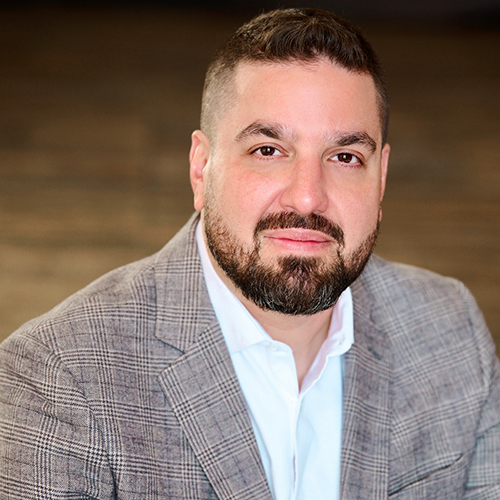
Our guest is John Rosenberg. And John, best way to describe him is that he is an empowering coach and consultant and he empowers leaders and organizations to move from survival mode to thriving mode. And he talks about that being some bold steps.
He's got over two decades of coaching Fortune 500 companies, global teams. He coaches them through transformations and he draws on his personal belief that positive change starts when you reclaim your agency. So we're going to talk about that. The control we have over ourselves. John was born in Venezuela and he's now based in Toronto. He's got advanced degrees from Cornell as well as the University of Pennsylvania. And he has served in senior roles at some of the big players in the corporate sector. Walmart, Procter and Gamble, Indigo, GoBolt. He is currently CEO of Strongpoint Group and the founding partner of Anther.
And that's a firm dedicated to helping people thrive.
We were introduced virtually through a mutual friend coaching friend out in California named Elena Rodezero.
And I immediately picked up John's book, which we'll talk about today. But I want to really, you know, I don't recommend books lightly.
So this, this is, I'm going to do this probably multiple times. I'm not finished with it. I'm about halfway through and. But the book is called A Guide to Thriving.
And I will tell you, the book just, I got intrigued right off the bat when I started reading the endorsements and the forwards and things you will not believe. The list of people that are holding this up, but their names include people like Dr. Marshall Goldsmith and Seth Godin. And this book is the real deal. And I just. We're going to talk about it a little bit. John's going to share some with us. But John, I want to thank you for connecting with me. This is so relevant for the listeners of this program.
And we don't have to just talk about the book. I like to have a conversation with you about the work you're doing and how you're helping people. And what is this? How do we get out of survival mode and move into thrive? So we got a lot to talk about, but I want to thank you for coming on, first of all. And I think I'll turn it to you and say, what did I miss in my introduction?
[00:04:05] Speaker A: First of all, Patrick, that was awesome. Can you just please keep going for a couple more minutes? No, that was great. Thank you so much for the kind introduction and for opening the space. And thank you to your listeners for dedicating their time to listening to the ideas that we're going to be sharing during today's podcast.
[00:04:23] Speaker B: Well, other than the book, which is a tremendous contribution, I always think of people's work product as are they contributing value and are they making a difference? And I can tell you absolutely, this book is.
Tell us about your work, though. How are you helping people thrive? You know, we have.
When we think about the various consultants and coaches that are out there, it's hard for us to imagine sometimes. Yeah, but what do you actually do? What is it with the clients that you're doing that's helping them move from survival to thriving? So maybe you just tell us a little bit about your work and how you got here and what you're doing with folks.
[00:05:04] Speaker A: Yeah, so I, I spend two and a half decades in the corporate world, climbing through the corporate ladder as you do, and using my elbows all the way up, you know, to, to make sure that I, I got to that first top spot.
And, and that was an interesting time. At the height of my career in corporate, I was recruited by a startup and I decided to sh.
Was we were in the midst or as I joined, we started our series B fund raising and we ended up raising $115 million in a series B round. And I said, I've made it. I got the title that I wanted. The team. I was running a team. It was about 1200 people at the time.
I'm a shareholder. I have stock options.
I.
This was my dream job.
Of course, I was working 16 hour days, seven days a week. It was a really intense time.
And after we finished the race, I went to Los Angeles to California to buy some facilities for our expansion. And as I flew back to Toronto, I came down with COVID And I was on a call with a technical team, talking about technical stuff, as you do on technical calls.
And the call got heated really, really quickly, and I realized I was completely overwhelmed. So I. I shot off my laptop, turned off my phone, and I was right here in my home office where I'm talking to you today, Patrick. And I heard my two kids playing in the basement.
So I went downstairs and they were sitting on the floor playing with Legos, and. And I just sat on the floor. No phone, no anything. I just sat on the floor and started building stuff with them.
A unique moment for me. In that moment, I felt present. And what I realized is that I hadn't been present with them for the past eight months, ten months. I just. I was there at, you know, at breakfast or at dinner, but I was just like a zombie, like a shell of a human walking around. My head was always thinking about the next email, the next meeting, the next deal that we had to close or whatever that was.
So that night we put the kids to bed, and I'm sitting in my favorite chair, and Adriana, my wife, walks in and she's like, are you okay? She saw that something was clearly wrong. So I put my. My hands in my face and I said, I think I'm done.
And over the next two weeks, I untangled myself from the company.
It's a brilliant company. They're still doing great.
And I started my consulting. My consulting business, went back to school to study psychology, and that ended up ultimately leading me to publish book. And one of the big realizations for me now this story is nice and neat, and it's clean to tell it in a podcast. The fact is that this was years in the making. And there were lots of really small cumulative moments that led me to that specific epiphany. It wasn't as clean, you know, nice. It's nice when you tell the story, but it wasn't as clean cut as it sounds.
And one of the things that I realized is that I had spent most of my life in survival mode, in this state of survival mode. And what I wanted to do, what I discovered in that moment with my kids, or when I cooked dinner for my families on Friday nights, or is that there are moments of thriving that we can have in our lives. And so I saw this binary of Survival mode and thriving. And I wanted to better understand how you move from one to the other. What is it that you can do to move from one to the other? And that's what drove me to write and publish the book. And I'm very, very grateful to Wiley for picking it up and putting it out there in the world, man.
[00:09:01] Speaker B: I mean, I love a good story that is really a great origin story. And yes, like I was imagining, as you were saying, and I was thinking, you know, John's probably told this story thousands of times, if not tens of thousands of times, and you do have it down. And, and it's, I can tell you've made it concise, but you can't listen to that story and not imagine that there were a lot of moving parts particularly that led up to that. And I'll tell you what it made me think of is, in fact, I kind of, I kind of would like for you to go back and give us a few more of these, the, the signals, the thing like you touched on really lightly. But if you could go back just a second.
We had, I had a guest, Dr. Kim Hires, was on the show a few years ago and talking about burnout, and she was talking about the symptoms like the signals. How do you know when you move from stress to burnout? Because those are two different things.
And it sounds like you were, I mean, what you were describing sounded like burnout. Is that, is that a word you would use for what you were describing and just go back maybe and say again what some of those signs were?
Yeah, that was powerful.
[00:10:22] Speaker A: One of the reasons why I like the world, the words survival mode, and I talk a little bit about this in the book, is because it's a non pathologizing way to look at a reaction that we have or a way in which we have to navigate the world. And I think survival mode is something that many of us spend a lot of time in.
And by the way, survival mode can be really helpful. Patrick I grew up in Caracas, Venezuela. It was a very dangerous place to grow up. The year Adriana and I left Caracas, by some estimates, there were 52,000 violent murders in the country. It's worse than a war zone. So I was being in survival mode while I was growing up in Caracas was really, really helpful. Had I not been in that state of survival mode, that state of alertness where you feel, you know, you're hyper focused, you're narrowing your options, you, you're in this kind of fight or flight kind of stayed, was really helpful because he told Me, don't go down that road, go on the other side, or don't go out at night, or don't, don't, you know, don't do things that will put your life at risk. So survival mode can be really helpful. Now, what we're experiencing today and one of the. There are many reasons for this, and I'm not gonna, I'm not gonna sit here and say that I have a comprehensive list of them, but one of the important ones is what evolutionary psychologists called, called evolutionary mismatch. And one of the things that's happening is that technology and the way the world is advancing is much faster. It's evolving much faster than we can as humans. So there's a mismatch between.
So we have access to all of this information on our phones, and we're exposed to all these news and videos and our calendars are basically running our lives. For many of us, we're just going from one meeting to the next.
So even though our physical well being may not necessarily be at risk, for many of us, we interpret that as if it is.
We interpret the world around us as if our life was about to be ended. And that puts us in this state of survival mode. Now, when that becomes chronic, when, when it's not just, you know, a spike of survival mode because you went on a roller coaster or because you, you got mugged in the street, but you get stuck in that mode, and a lot of us feel like we're stuck in that mode, then it becomes a real concern.
[00:13:02] Speaker B: And again, you realized that, though, in your story.
So what were the specific things again, that made you go, hey, wait a minute. This is like, we get into these places, we don't realize we're there.
What made you realize you were there?
[00:13:24] Speaker A: Yeah, I guess hindsight's 2020 in the moment. This is not the way I would have described it, but now, after having done the research and having learned what happened, what I would argue is that play is one of the ways in which we tend to feel safe humans. And that's exactly what I was doing with my kids. I was playing, and I was engaging the creative part of my br. And the three of us were sitting there in the carpet just playing with the Legos. We were engaging our creativity. We were connecting as humans. We were playing.
I felt safe, they felt safe. And in that moment of safety, what happens is that instead of being in your amygdala, you get to engage the prefrontal cortex of your brain, the executive functioning center of the brain, and you start to see options where you might have not seen any before. Sorry.
So I think that's one of the keys to agency, which is one of the big themes in the book. This idea that one of the ways in which we can go from survival mode to thriving is using our agency and developing our agency, which is a skill.
So the way that reflected in that moment is for the longest time I believe I had no choice. I could not leave that job.
I had to keep climbing and keep doing better and keep producing. I had no choice because the moment I stopped doing that, in my mind, within two weeks I would lose my house and be living under a bridge. That's what my mind told me. And I believed it. I believed it to the bottom of, you know, like, like visually believe that what happened in that moment is I saw another choice. I said, well, I can leave and I can just figure it out. And, and that was it. So I would say that would be an increase in agen now full on agency would have been saying, huh, what is actually happening here? And analyzing and saying maybe I could reduce the number of hours that I'm working and set some boundaries. Maybe I could hire more of a team so I don't have to take so much of the weight. Maybe I could delegate more.
Maybe, you know, or if I left, maybe it wasn't just starting my business, maybe I could rest for six months instead of going right back into it and doing all of these things. So what I would argue is that the more we develop agency, the more options we see, the more choices.
And the more choices we see, the more we're running our lives as opposed to just defaulting to all of our reactions. And I think that's an important thread in the book.
[00:16:02] Speaker B: There's a very funny scene in the old movie Dick and Jane with Jim Carrey where I think. Was it Dick and Jane? I think that's the one where he and his wife start burglarizing because he loses his job in the big corporate thing and there's a place where he's just, just, you know, he's at his wits end and he jumps up on the table in the middle of a country club or a bar or something and he's, he's acting, he's physically acting out like he's a marionette or a puppet and he says I'm a corporate puppet.
And.
But the, the way that movie is portrayed. And I'm thinking of this because when you talk about agency, that's the opposite of being a puppet. And you weren't Saying you were a corporate puppet, but the fact that you believed I have to follow this system that I'm in or it's going to be bad for me. And so the lack of agency as you describe it, and I say all that to ask you what is your definition of agency? Use that term a lot. We think about, I don't know, maybe autonomy or thing. But how, when you say increase our agency, define that for our listeners who might not be familiar with that term.
[00:17:22] Speaker A: Yeah. So agency, the way I define it, it's a skill, it's something that can be learned and it's the capacity to make intentional choices and the belief that those choices actually matter and have an impact on the world.
So, so there's a lot to unpack there. Right. What do we mean by intentionality? It means that it's in order for you to make an intentional choice, you have to consider other ch.
So when you are in a job and you say this is the only choice I have, I have nothing else to do. And by the way, Patrick, I want to do a quick parenthesis here because there are people living paycheck to paycheck and working two or three jobs in order to survive. There are systemic constraints to our agency. That's a very real thing.
I'm talking to the folks who may already have their basic needs covered and they feel trapped.
Those are the folks that I'm talking to, to the folks that are in survivors survival mode because the system has put them in that place and because they are systemically constrained, then the more we thrive, the more we can help those folks.
[00:18:30] Speaker B: Right.
[00:18:31] Speaker A: So, so, so but this idea that we can make an intentional choice that in that moment I said, okay. I went from I don't have a choice but to stay in this job forever or until there's a liquidity event or whatever that looks like.
Now I have a choice to leave and my wife will support me, my kids will support me, my family will support me. So, so that was an increase in agency that gave me a choice where I had seen none before.
And the more, most, most importantly, I actually believe that making a different choice would have an impact in my life and in my world. And some of that impact might have been negative because there was fear there. There was a lot of fear there, but some of the impact was positive. There was optimism, there was hope, there was a notion of this might make my life better, hence why I'm making this choice. So, so I think that's really important, that's really good.
[00:19:27] Speaker B: And, and yes, people have different degrees of being in that place of agency. And I appreciate you calling out that.
Imagine some people would listen to this and say, well, it's real easy, John, for you to say that I can choose, you know, but you don't understand where I'm at. You don't understand what I'm going through. And I think even then there are some choices we just don't realize we can't see them when we're in that place. There's a model we use in our coaching, and you've probably heard this, but that we call CIA and trying to help people understand. If those were columns C, I and A, what are the things let's say about a particular situation or event or scenario? What are the things you control?
That's the C. I completely control it. My hands are on the knobs and levers. I get to choose and decide.
I don't know how much exercise I get in a week. That's totally. I get to decide that.
What are the things in the middle column that I can't fully control, but I might be able to influence them CI with some effort and with some belief. What's some influence I can bear on it even if I can't unilaterally change something.
And then the A and the A, we used to say, is the column where you put things that you have to accept I can't change these. These, these are the things that are outside of my sphere of control or influence.
We've since come to use the word adapt either at least along with except meaning there are some things I can't control or influence them, but I have to adapt to them. I'm the one that has to do some changing around the environment. Environment. And so what we tell leaders is it's a mistake to try to control or influence something that you can't beat your head against a wall that is outside your circle of influence, of ability to change.
But it's also a mistake to accept things that you could have controlled or influenced and didn't know it, didn't try, didn't believe in it.
And that's kind of one of the ways we describe agency. I would love your feedback on that model, your thought on that model, good, bad or otherwise, because this is an area that you've studied deeply. But is that what we're talking about?
[00:21:45] Speaker A: I think there's a lot of overlap there and I like how you've simplified it.
What I would say with regards to control is that it depends how you define control. So let me maybe ask You. Patrick, what do you mean by control in the model here?
[00:22:03] Speaker B: Well, so if I'm. Let's put it in the context where it comes up, which is in leadership coaching. So let's say I have a leader that says, man, I've got an employee who just won't show up on time.
Okay, well, as a manager, there's a couple things you can control. You can't control the other person, can't control the employee. You can influence them.
You can influence them by the things you can control. What do you control? I control the schedule. If I'm the manager, I control what time we start, start how long lunch is.
I control my consistency in applying the employee manual.
When someone's late three times. I, I control my behavior, I control my response. I control how I treat that person.
I control my emotional whatever it is and how I frame it and deal with it. I don't control the person. Person. The person has to be influenced, not manipulated, but influenced to walk a different path.
And so there are things outside of my control or influence in that situation. If this employee has six kids that they have there, you know, and they're a single parent and they have to get those kids to school and I can't control their family and who like their life situation outside of, of the job. There's some things I have to accept about. Well, I hired this person, they work for me, but they have these situations. I can't control or influence those situations. Here are the things I can control and influence. How might those create a win. Win.
[00:23:41] Speaker A: That. Yeah, that's, that's fascinating. I, I would, I would just that I, I guess if we're as, as two people just talking to each other, if we're to kind of gently challenge a little bit some of the notions here, I would.
The idea of control for me is complex.
[00:24:02] Speaker B: Yeah.
[00:24:04] Speaker A: I think it was William James, the father of, you know, modern psychology in the early 1900s, who said that the only two things that we can control is our effort and our attention.
And, and I found that really, really powerful.
Why, why do I, why do I find that so powerful? Because it is all intrinsically driven.
And I sense. So you gave a really good example. I control the schedule. Right. I can control when I set the times.
Yes. And how does controlling the schedule change the situation?
[00:24:45] Speaker B: Right.
[00:24:47] Speaker A: I'm curious now if.
[00:24:49] Speaker B: Well, it changes it. So for example, if this employee, if the hours are 8 o' clock and they just can't get there till 8:30, and because of these situations, well, I can, I can Change the schedule just to accommodate that one person.
Hopefully make no one else upset or change the hours for everybody. Maybe everybody will love the fact that we've moved to 8:30 now, but that is one thing that if I, if. Because I have control of it, and in fact, it's probably something the employee would want me to do.
Can you, can we change my hours to 8:30 to 5:30 instead of 8 to 5?
So because I control that. That, that's what I mean by, you know, I think of. Great. I always quote, you know, Admiral Grace Hopper, who said, you manage things, you lead people.
Which to me is that whole. I control the things I manage are the project parameters, the schedule, the pay, the, you know, the process, all of that. The people, though I don't, I don't necessarily manage them. I lead them, which is, which means I influence them.
[00:25:53] Speaker A: Yeah. And again, I think it goes back to the definition of control. What does it, what does he really mean to control something or someone?
[00:26:03] Speaker B: Great question.
[00:26:06] Speaker A: And I don't know the answer to that.
The reason why I shifted the model to agency, which you could argue that it is within your locus of control to make choices.
But even in that case, agency needs to be developed. So it's not like we fully control it unless we have the skill set to develop over time.
So I think it's interesting. I think we're getting into an etymological conversation and getting into semantics, but I think the foundation of the CIA model is sound. I think what you're trying to separate is what is, what is within my, my realm of things that I can change and what isn't. What isn't.
And I love the idea of, I, I know you're changing.
Acceptance to adapt. I, I am a very big fan of the, of the notion of radical acceptance, of just coming to grips with certain realities.
You know, my, My wife was diagnosed with Ms. Only a couple of years.
That's been a very, very difficult journey for us.
And it's taken us a very long time to accept that she's now living with this new condition and all of the implications that that new condition has not only for her, but for me, for the kids, for our friends, for the people around us.
And the moment that we finally started saying, okay, this is what it is, because we fought it for a very long time.
[00:27:46] Speaker B: Time.
[00:27:46] Speaker A: We fought it and we fought it and we fought it. And the moment we accepted, okay, this is, this is the, the, the circumstance that life has delivered to us. And I don't have to like it.
The moment I accept it. I can start working with it a little bit differently.
[00:28:08] Speaker B: Yeah. And accepting is not quitting.
Those are different things.
[00:28:13] Speaker A: Well, this is interesting. This comes from one of the third wave approaches of therapy called dialectical behavior therapy. Marsha Lineham, the founder of it, she talked about the process of growth as a balance between acceptance and change.
And they both can live together. So there's the acceptance that now I've been dealt this very difficult situation and change is okay, I've been dealt this situation and how can I engage with it? How can I engage with it cognitively, emotionally, physically, in order to make the most of that situation?
And this is a hard thing to understand because we're, we're used to this binary world where we want to see things in black and white. You know, I feel the anxiety of doom scrolling through the news and trying to wait until you get that hit of good news that you're looking for. And by the way, this is a boast. Sides of the political spectrum, people are just trying to see what is actually happening, and we're looking for that certainty. I think the moment we can switch our brain and we were talking before we started recording about adult development and the lens of adult development, the moment we can get to that point where we can accept that two things seemingly opposing can be quote, unquote, true at the same time, can be valid at the same time. That is a really powerful unlock.
[00:29:42] Speaker B: It's very powerful.
So again, the example that you're giving with your wife, I think fits perfectly into the CIA model in the A column goes, I have the disease.
I can't change that. I have it. It is what it is. And this is what this is. What we know is, is happening now and is going to happen, we have to accept that can't change it, can't control it.
How we react to that, what we do with that, what we decide our relationship with it is going to be, is more in the what do I. In other words, what do I still control?
I don't control this disease. What about me do I still have control of, including my. The relationship I have with this disease?
There's a, There's a book we've talked about on this show called the Upside of Stress and some new research around stress that says it's not the stress that kills you, it's not the stress that causes heart problems and all these things. Things. It's our attitude towards stress, it's our relationship with stress and how we view it, how we respond to it. That is what makes the Difference.
So, yeah, I mean, it's. I love what you said. The words matter, but they're also subjective.
I've used the word influence before, and with some coaches, there was a. There was a. I was coaching someone who was, who kept struggling with that concept, and they were like, yeah, like what? Tell me what it. Well, it turned out it was the word influence really bugged her because to her, when she heard that word, she, she thought manipulation.
It's, it felt subversive. Especially in leadership. I'm influencing people. You know, John, John Maxwell's definition of leadership is influence. Nothing more, nothing less. But for this person, and, and very valid. Valid.
The word had more of a manipulation connotation than it did a, an empowering connotation. So you're right, they're subjective. And it's important to define these words as we go through them. I appreciate that because it actually prompts me when I use this model with people to pause and allow for that nuance and help people kind of define those terms.
[00:31:54] Speaker A: Yeah, it's, you know, I find that defining terms can be, be. Patrick. Such a powerful way to, to, to create breakthroughs in, in our own work, our own growth and growth for others.
And sometimes because there are so many words out there and we are inundated with content, we don't actually pause and say, what do I actually mean by X or by Y? And, and that, that work, which is philosophical in nature, I think it's, it's. It's a really important part of the, of the process.
[00:32:28] Speaker B: So while we're on it, how do you define thriving? And I, it. It might be unfair for me to just ask for a Webster's. Your Webster's definition of it. I know you have actually a frame, a whole framework for it, but what are you talking about when you say thriving?
[00:32:46] Speaker A: Yeah. So first, before we define thriving, let's define what thriving is not.
[00:32:52] Speaker B: Okay, good.
[00:32:53] Speaker A: How's that?
[00:32:53] Speaker B: Because I think.
[00:32:54] Speaker A: Think definitions mean nothing unless we can say what something is not. That's just as important as saying what it is.
And I think often in society we've equated thriving with success, and we use those terms interchangeably.
Somebody gets.
[00:33:10] Speaker B: I was going to say achieving or achieving.
[00:33:15] Speaker A: I'm just, I'm going to get to the definition of success that we have in our society, by and large is money, status, and power.
If you have more money, more status, or more power, you are successful.
So. And the interesting thing about those three metrics of money, power and status is that they're basically unlimited. You can have as much money as, you know, we're about to have the first trillion in. In. In the world. You can have status, you can always have more accolades, you can always have more awards or a different, more followers on social media, more likes, more engagement.
And, and power is, is really the, the, the, the, the ability to accomplish what you're looking to accomplish despite persistence. And we see people trying to hug that power more and more. There's also. So these are kind of like three unlimited things that we can, that we can pursue. So no wonder we're burning out. Because if we're chasing success and there's unlimited success available for the taken, right, we're just going to keep chasing it and we're never going to get to the point where we say that's enough success for me.
So let's flip over to thriving. Now the way I define thriving is by three more intrinsic perspectives. So number one is agency. How much agency we have in our lives and how we direct our lives.
Number two is connection. And by connection, I mean connection, social connection, connection with others, connection with the self, how well do we know ourselves?
Connection with nature or animals, connection with the transcendent. It could be God or whatever it is that you believe in. So connection is the second pillar of thriving. And the third one, one is meaning, which is the why, how we make sense of our lives, how we, how we make sense of how we navigate the world. So, so to me, so you have success. And by the way, there's nothing wrong with success. I want success just as much as the next person. And then we have thriving. The question is, at what point do we start trading thriving for success?
And we end up in this, in this treadmill that we're just chasing success, success, success, and we forget about, about thriving. So, so I think there's a trade off there. At some point there's a trade off and we're not actually consciously making that, that trade. We're not being agentic in terms of choosing our thriving over success. So if we can develop that agency, then we can start making that trade off intelligently. And that's what I'm advocating for.
[00:36:04] Speaker B: Wow.
So I'll tell you, I'd love your take on this too. I'm, I'm thinking back to one of the very basic models we learn in, in, I don't know, I think I learned it in middle school in social studies or something.
Maslow's hierarchy of needs, where you know, our, our basic need of, of food and air and water and shelter and sleep and warmth. And those kinds of things. Then we go to safety. Am I secure? Am I safe to have health?
We go to love and belonging and social, some of that connection.
Then we go to esteem, which recognition and status and some of the, maybe the success things that you're talking about. And then you go to the self actualization.
And I've heard people say Maslow's hierarchy of needs is outdated and it's inaccurate and that's not really how we look at it anymore. And yet as you're talking, it makes total sense that there is a hierarchy of needs in the places that we go. And I'll, I'll get your response to that and then I'll relate it to another model that's been more recent for me.
[00:37:19] Speaker A: Yeah, so, so two things about Maslow. The first one is, interestingly enough, and this is often not cited when you talk about Maslow. He, he then added something above self actualization in the pyramid, which was self transcendence.
And it's this idea of going beyond the self and the idea of connecting with something larger than the self, which I talk about in the book, is one of the points in my model. The second thing is I think Maslow's model has been instrumental and foundational for our exploration of human psychology and how we relate to the world. Now I tend to be a little skeptical of hierarchies in general because, because it depends when you, when you ask a psychologist any question, most psychologists will start with it depends because it, it is context relevant. Yes, of course you need oxygen. That, that would be at the base of the pyramid, you know, oxygen. But then how would you, how would you, like, how would you explain people who went to war and died for their country when they were sacrificing oxygen and food and some of their most needs and you know, in a battlefield, how would you explain that? So I think context is relevant here and I think hierarchies in general, although very helpful to illustrate something and to give us kind of a sense of what's more important, what's less important.
It really depends on who the person is and where they're at in their, in their journey and in their lives.
[00:38:57] Speaker B: That's totally, that's totally right. Totally fair.
And it's not like we ever really lose our, the previous needs.
We can get to self actualization. We still need air. Right. We still need the love and belonging. We still need the, you know, the safety and the security. So it's like what has come online for us. And once it's online, it stays There and you, you try to get to a further place in your life. And this leads me to this concept of vertical development which has been a, a focus of a few of our shows in the last, I would say several months.
[00:39:29] Speaker A: Months.
[00:39:30] Speaker B: And this is where so our mutual friend Elena Rogero and I met in D.C. at a vertical development training with a couple of master ICF coaches and trainers at Georgetown in their coaching program. And Aman Gohal and Bill Pull, in fact were on the show. Go back and find them in one of the previous episodes. But talking about this concept of vertical development, so, so to use your model, let's start with what it isn't.
So horizontal development, for example, is our growth in capability skills.
You know, we reach places in our life where, oh, I bought a house, I got married, I got a degree, I got promoted, I got, I learned this, I added this, all of that sort of as sort of of horizontal development, vertical development being more of our capacity and our worldview.
So as we go through life, we have these different stages of vertical development that we reach. And what you're describing in survival mode would be on the vertical development model, what we call opportunist or maybe even diplomat. In other words, people who are sort of whatever I need to do to survive would, would fit in the opportunist model. I'm not going to go through the whole thing, go back and listen to the previous episodes. But where, where I'm really, everything I do, I'm doing in survival, like I've got to make sure I'm taken care of here.
And then as you move through the vertical development through, okay, now I'm operating in diplomat mode where I just want to belong and I want to be a. I want to, I want people to accept me. I want to feel like I'm a part of something, I can identify with a group, for example.
Then I move to expert stage where I've learned something and I know it's a value.
And I thrive in finger quotes. I thrive on sharing my expertise because I have it and I want to share it and I want it to be leveraged and used and create value.
And it makes me feel confident and safe because it's what I know. Then we go to achiever and the achiever, maybe that starts to get into the success mode. The achiever is very goal oriented and I want to achieve things and I want to use the previous things, the opportunist, the diplomat and the expert to help me achieve. Then we go to redefining and I'm Starting to think things differently. I'm starting to ask questions, is this all there is?
Am I really contributing value? We go to training, transforming. We go ultimately to alchemy, which is what you're saying is the sixth, the tip of the pyramid now in Maslow's thing of beyond self.
And what you're talking about is very related to me to vertical development. And I only bring that up just, just because I want to remind our listeners to go back and listen to that episode as well. It's very much tied to surviving versus thriving. I'm almost looking. You're helping me look at it. I can take that vertical development model and just put surviving at the bottom and thriving at the top. And it's almost like that's kind of what we're striving for. I don't know where I'm going with that other than just to share it.
[00:42:54] Speaker A: Again, I appreciate where your mind is going, Patrick, and I'm gonna gently, again, just gently push back on that because I believe at any stage of vertical development, and vertical development is inspired on adult development theory, and you know, we're talking about Robert Keegan here and, and Lisa Leahy, and I believe that you can thrive at any stage of vertical development and you can, you can, you can, you can be in survival mode at any stage of vertical development. So, so I think that the two.
[00:43:32] Speaker B: That's fair.
[00:43:33] Speaker A: The two frameworks can, can overlap. But even when you're a diplomat, you can be thriving. Thriving as a diplomat and, and who knows?
Going to develop through our life. Right. Like we know that. I think it's less than 1% achieve the alchemy stage in. In. In. In vertical development.
So.
[00:43:52] Speaker B: Especially in the workplace.
[00:43:54] Speaker A: Yeah. So what I would say you don't need to develop vertically in order to thrive. I would certainly think it might help. I don't know what the correlation is between the two. I think it would be interesting. I think it's a fascinating question that you're asking here, Patrick, whether these two things, how they correlate with each other and how they play with each other. Other. And it may be possible that the higher you are in adult development or vertical development, the more likely you are to thrive. It may be pos. It would be an interesting hypothesis to test out. I'm just not sure at this stage. I don't know that we have the data or the information to support how these two ideas relate with each other, but I think intuitively speaking, there seems to be something there for sure.
[00:44:38] Speaker B: Well, as Aman says, all models are imperfect and some are useful. Useful. So the idea here though is I don't disagree with you at all. I think you're right.
The model itself, if in its, in its simplest form though, would challenge the notion of thriving. If you're in opportunist stage is literally opportunist stage is defined by survival mode.
And so, but yeah, I think it's more a correlation than it is, you know, apples and apples overlay. I don't, I don't think you could make it that way. Turns out all these models, we're more complex than that.
[00:45:19] Speaker A: How do we define somebody who's in an opportunist stage?
[00:45:26] Speaker B: I would again, survival is probably the word I would use.
And, and many people who are in opportunist stage will use not influence, but manipulation to get what they feel like they need or want.
So I tend to think, for example, just real quickly, the idea of success that you talked about, the opportunist might not always, but might see success as something of, well, somebody's gonna get it and it needs to be me.
In other words, we can't all have it. I need to make sure I'm getting mine or someone else is gonna get it. So there's you. In fact, you use the word in your book, fear.
I think sometimes, I think I would say opportunists operate with, with a background of fear.
You'd have to go look at the mod. I mean, the word opportunist by itself, you would argue with everything I'm saying right now. But as it's used in the model, it often describes things I'm talking about.
[00:46:43] Speaker A: Fascinating. Yeah, I, my mind, as I'm hearing you speak, Patrick, my mind immediately goes to kind of like a kid trying to get something for themselves in the, in the playground or, or even, even, even earlier than that, a baby crying, to quote unquote, manipulate the feeding him, you know, or the caretaker into feeding him. So, so, so, so I think I, I, I get how you're relating this to, to the need for survival.
That, that makes, that makes sense. I, I think it would be interesting to test this out. Maybe I'll talk to Aman. You know, Aman was my, my learning circle facilitator when I went through the Georgetown coaching program.
And she's, she's incredible. So I will reach out to her and, and ask her about this. So start of a correspondence between the two of us on this.
[00:47:38] Speaker B: I think that'd be great.
And we here, here just to give it to you in, in the, I'M referring right now to a Harvard article on the seven transformations of leadership, which is using the. The vertical development stages. I just went through opportunist, diplomat, expert achiever, etc. The characteristics of opportunist are described as wins, any way possible possible, self oriented, manipulative, might makes. Right now, the strengths are that they're good in emergencies, they're good in pursuing sales because they're very persuasive and they're dogged.
Right. The weakness is that very few people want to follow them for the long term because they sort of see through that. So while opportunist sounds, I mean, again, words, there's a lot of value in being an opportunist, seizing opportunities. And that's what we do.
I find myself an opportunist a lot, but I'm hoping less in the ways that this model is describing it. So anyway, yeah, it's all, it's all subjective and relative and I, like you have questions.
This vertical development stuff is still relatively new and researched, in my opinion. Researched a little insularly.
And so I think it still has some testing, but I think the concept has some validity to it to think about.
What's my view? How am I showing up?
Yeah.
[00:49:10] Speaker A: And I think the most important thing about a framework such as this one is whether you as the person using the framework to try and figure out your own path to personal growth, whether it resonates with you.
[00:49:23] Speaker B: Right.
[00:49:23] Speaker A: And, and, you know, research for, I mean, research is amazing because it allows us to figure out, think about it. We wouldn't have had, we wouldn't have this laptop, the zoom, this, all of these different things had it not been for science. But when it comes to psychology specifically and the social sciences in general, research often only takes us so far. It gets us closer to certainty, but it doesn't give us certainty.
And I think that's important to keep in mind with all models, including the work that I have in the book. And by the way, I encourage folks who are interested in reading the book or engaging with the ideas that we're talking about today, Patrick, to push back and to say here I see it differently because I think we all see things differently and that's what makes this work that we do so fascinating.
[00:50:18] Speaker B: 100%.
Let's, we're, we're. Gosh, I can't believe we've been on as long. We could do eight episodes on this stuff and never run out of material. Let's talk about the book for a minute because there's a couple of models. I love models and frameworks. They just give us reference.
There's a couple models in the book, one of which is probably, you need to get the book and go through it. It's. It's a what, what? The architecture kind of piece. The map, as you call it. It.
And then there's a. There's a model or an acronym that you use called AIR that I'll let you walk through. But if you would just. Just briefly give us the high level of how this book is set up and how these models are to be used as you're reading the book.
[00:51:06] Speaker A: Yeah. So I would say it's called A Guide to Thriving because it's more of a guide than it is a book. And what I mean by that is that you could actually pick it up and open it up on. On any chapter that calls to you and read it from there. You don't need to read a cover to cover.
And one of the reasons why I wrote it that way is because I wanted people to have agency in how they engage with the ideas in the book.
I often feel the pressure of, oh, I started reading this book, now I got to finish it, and I don't love that. So I wanted people to have a bit of a different experience. Now, the way the book is structured is there's a map with nine different elements. I'm not going to go through them in detail, but I can tell you that at the center of the map is beliefs, because they are the lenses through which we look at the world. And then there's a section on thoughts and. On emotions and actions and sensations and transcendence. So there are several different sections in the map. And the general idea was to offer folks an opportunity to navigate through all of the threats in the book. Now, what I try to do here in, In. In this guide was to bring together the last. I'm going to call it two and a half decades of research. There's a lot of information that hasn't yet made it to. To the mainstream. There's a lot of information that we don't know that can help us go from this state of survival mode to thriving. And we're usually not aware of it. So I wanted to make it accessible for a lot of folks. Um, that was part number one. Air, which stands for awareness, inquiry and reframing is the model. As I started going through the research and trying to figure out, okay, how do we develop agency? How do we. How do we become more agentic in our lives? If it's a skill and you can have less or you can have more. How do I practice so I can have more of it? And, and by the way, I do believe there's such thing as too much agency. But let, let's not get into that just yet.
But so, so how do I get from having very little agency to having more? And what I found is that three things kept repeating themselves in the research.
Number one, and I summarize them in an acronym, air, which stands for awareness, inquiry and Reframing. It seems like we both like three letter acronyms, Patrick. So let me maybe quickly explain this and, and I know that most folks are listening, listening to us, but I have a Rubik's Cube in my hand right now.
My, my younger one, Jacques, was supposed to go to summer camp, camp last month. And three days before going to summer camp, he broke his arm. So we gave him a bunch of Rubik's Cubes and that's what he ended up doing while all his friends were jumping in the lake.
Now when we're going through a difficult experience or a difficult emotion or negative thoughts, often what happens is that we become immersed in the experience. So it feels like the Rubik's Cube is right next to our face, right next to our eye. When an object is so close, we can't actually see the object, all we can see is one of the little stickers in the Rubik's Cube. Maybe one color. So some people say I'm seeing red. You know, that's all you can see, the red of the Rubik's Cube, but you can actually see what, what's happening. Awareness gives us a chance to distance ourselves from the situation. It gives us 12 to 16 inches of separation from the situation we're experiencing. And the moment we have that distance, we can say, huh, what is happening here? Here I have a Rubik's Cube in my hand.
Then we can move into inquiry, which is the eye in air, and we can start asking questions. Okay, what is this? Oh, it's an object. It's a kid's toy. It's a cube. It has six sides. Each side has nine stickers. Each sticker has a different color. And then we can play around with it and say, oh, you know, you can move it in different ways and you can create different combinations. So that would be inquiry. And it's asking a lot of non judgmental open ended questions without an agenda, without, without a final objective in mind to explore the situation.
And then finally is the reframing, which is the combination in the Rubik's cube that works best for you. And by the way, that may be solving the cube or it may be something completely different, but it's a combination that allows you to move past the situation and to grow from it. Now, you talked at the beginning of our conversations about resilience. This is where kind of resilience comes into play.
Resilience has often been defined as bouncing back. I think a better definition is bouncing forward because we're never go back to the same. You never step on the same river twice.
So, so there's, there's, there's a bit about resilience in terms of that reframing, reframing helps us be more resilient in the moment.
[00:56:03] Speaker B: Yeah, I was, I was going to ask you about the relationship between thriving and resilience, the stories, and I won't, I won't get into them or give them away right now in the book, but the personal stories you detail in the book really made me think about resilience and the idea that again, apologies to listeners for bringing some of these back up repeatedly, but they're concepts that come up repeatedly. And one is that they say that resilience is the opposite of fragility.
And I read a few years ago, a challenge to this, a scientific challenge to this, it says, no, no, anti fragility is the opposite of fragility.
Resilience, as this scientist described it, was sort of, sort of a bouncing back or the ability to recover from any set of disruptions or whatever. Anti fragility is actually coming out better than you were, not in spite of the challenge, but because of the challenge that, that literate, that it literally, literally put you in a stronger place, which is the bouncing forward idea of resilience. And to me that is, boy, such a great illustration of the continuum from surviving to thriving.
[00:57:26] Speaker A: Yeah. And I would say, you know, what I hear a lot is that people are saying, I'm done being resilient. I'm sick of being resilient.
Because it feels like these days we are having to be resilient a lot, which, which can be really challenging.
Now what I, what I would suggest is that our, our capacity to find thriving, even despite difficult situations is what I, what I mean by thriving. So I think a lot of times when people talk about well being and thriving and flourishing and all of this, they talk about it as if it absence of negative emotions, as if it was the absence of challenges in life.
You can be thriving even while you're going through a very difficult time in life by the way you engage with it, there can be thriving in the presence of negative emotions. There can be thriving in the presence of difficulty. And that's what I'm trying to suggest here. And that's where resilience plays a big role. Right. Because it's. Eventually, resilience is often how we feel after we come out of it, you know, But I don't think you have to come out of it in order to call yourself resilient. As you're going through it, you are being resilient. And the mere fact that you're still here and you're still engaging with life in the best way that you can, considering your circumstances, it's an incredible show of resilience. So I think I'm.
I just. Again, we try and go with this. Binaries of you either have thriving or you don't have thriving. And that depends on your strength. Circumstances you can find thriving even in difficult circumstances. That. That's what I'm trying to propose.
[00:59:17] Speaker B: Yeah, that's.
So much of this is coaching tenants that you're talking about, too. You know, the inquiry being the way you described inquiry and.
Yeah, all of these. Man, we could go a long time on this. John, I do want to refer people to the book. I do want to ask you this. Just you can. I don't know how this. I probably shouldn't do this. Not fair. But if you can quickly talk about the word belief, because a big part of this book is about our beliefs and what those actually are and how. How do we have.
How do we manage our beliefs? How do we understand our beliefs? You opened up your whole thing about this with your belief about, you know, your corporate world experience that you were living in. I just want to give you a. A moment or two to talk about the value and the relationship of our beliefs with all of this that we're talking about.
[01:00:18] Speaker A: Yeah. So beliefs are the lenses through which we look at the world. And there are beliefs that are conscious beliefs. You know, like, I believe that so and so is the best person to run the country. Right. That's a. That's a.
And a lot of them are unconscious beliefs.
One of the.
One of the beliefs in my work with clients that often comes up and it's. It's like a coin because it has two sides to it, is this belief that on one side says, I'm not good enough, and that can be defined in a million different ways, and on the other side it says I need to prove myself. And this is. This is a very. I believe that's often under. Underneath the surface. And when we start to bring it up in our conversations and when we start seeing how it influences.
Influences and how it shapes our lives to some of the decisions that we make, some of the way we engage with people, some of the way we feel, when. When somebody doesn't respond to a text message or an email, when we see how these things start permeating through our entire experience of life, then we can start diffusing them. So. So I think beliefs are really, really important in terms of this work, and that's why I put them at the center of the map.
[01:01:38] Speaker B: Beautiful. Beautiful.
John. I have two questions I like to ask all my guests before we wrap up a show because I love the stories and I just love the attendance and the inspiration that comes out of it. And so I'll ask you these questions and then we'll. We'll wrap for now. But I. I gotta tell you, I want to hold an open invitation because this is. This is a conversation we should prob.
Or have the next one. I would love to have you back on the show at some point.
One of the questions is this. Who is a leader who comes to mind for you as a leader in your life who you would say has had profound impact on your leadership and your view of the world and leadership? Who is that and why?
[01:02:24] Speaker A: I would say it's my coaching clients.
They are the leaders who have had the most influence in my life.
And by the way, you know, people often ask, what does it take to be a good coaching client?
And in my. In my practice, I have only one. One condition, which is to show up. That's it. To show up and.
And have a conversation that, to me, is a good coaching client. Now, the reason why they are the best teachers that I have is because in these conversations, as we're exploring, as we're going through the inquiry and asking all of these, I end up seeing things that I never saw before. I end up learning so good. And there is no place in my life where I get to be as curious as I am when I'm working with clients.
And I believe that's a gift. So that would be my answer.
[01:03:21] Speaker B: And that's a unique. I didn't see that coming. That's so good. And thank you for that because that reminds me to really, um, you know, go back and center on the gratitude I have for the people I coach and the organizations I work with. You're so right.
We should be learning throughout this. And I appreciate that you talk about what it takes to be a good. We call them coachee, right. Or client.
What I always say is people ask, what does it take to be a good coach? And my answer is good coaches.
So if we take your definition of a good coach GE that's the secret sauce to be a good coach, too. I think part of it is is anyway, if we're doing well at holding the space.
Last question. You're at the top of a mountain and you you've got a a mega megaphone, and all the leaders of the world are at the base of the hill and they can hear you. And you have 15 seconds, give or take, to tell all the leaders of the world what you believe is the most important thing for them to keep in mind as leader. What's that? JOHN rosenberg?
Soundbite Know yourself.
[01:04:32] Speaker A: And that's not a that's not a a JOHN Rosenberg, by the way, philosophers have been talking about this for thousands of years, but it's the one that I would say, know yourself, get to know yourself. The moment we start connecting with who we are and we start learning more about how we behave, the way we behave, how we think, the way we think, how we feel, the way we feel. The moment we start doing this, we become good leaders. And the second part that I would add to that is when you're thriving, people around you will thrive, too, because thriving is contagious.
[01:05:08] Speaker B: Oh, man, it's good. Hey, that that's worth the hour we just spent right there. Thriving is contagious.
I love it. John, thank you so, so much for this was rich. This is one to go back and listen to several times, actually.
And folks, again, a Guide to Thriving is the book.
The website is john rosenberg.com. we'll put the link on our podcast page, but John is Jon and Rosenberg is R O S E M as well. MARY not Rosenberg, Rosem Berg and Berg is with an E J O N R O S E M V E r g john rosenberg.com or you can find him on LinkedIn with that name spelling as well.
Go Thrive. Lead on.
Sam.